A list for unschoolers who are interested in moving towards a sustainable lifestyle. Topics for discussion may include how sustainability and unschooling complement each other, and how we resolve conflicting values.
No other book on home education has encouraged more teenagers to "rise out" of school than Grace Llewellyn’s Teenage Liberation Handbook. Seven years and many liberated teens later, she has evolved into a recognizable, respected voice that unschoolers embrace.
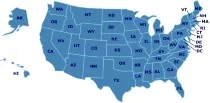
The Western Region Unschoolers is a group for unschoolers who live in the Western U.S. covering: Montana, Wyoming, Colorado, New Mexico, Idaho, Utah, Arizona, Alaska, Washington, Oregon, Nevada, and California. This is a forum to announce and organize conferences, travel, camping, and other places to get together.
This list is a place for unschooling dads. Whether you're an advocate, long-time unschooler, novice, or somewhere in the middle, you're welcome here. This list is for dads only.
What does unschooling look like? Why do people unschool? This seasoned unschooler offers the encouragement to simply give unschooling a try, especially if your homeschooling attempts have proven to be unsuccessful or stressful.
Share successes and ideas and build a helpful, welcoming archive for the new unschoolers, the newly-unschooling, and the nicely unschooling.
Do Christian "natural learners" ("unschoolers") have a world view the same as other Christians? Some of them will, but not all.
This essay was written for the Harper's Magazine forum, "School on a Hill." John Taylor Gatto discusses how public education cripples our kids and why.
Does unschooling mean that your children just hate school? Not at all! Some children learn best in a classroom, but not all do. For those who don't, unschooling might just be the best approach. Children who are unschooled grow to be independent learners and thinkers and enjoy the perspective of being their own best teacher. Rather than asking, "Why unschool?" perhaps the better question is, "Why school?"
African-American Unschooling is the resource for African-American homeschoolers with an Africentric approach to learning all the time. African-American Unschoolers encounter math, science, reading, writing, art and history in the real world because real living leads to real learning.
Grown Without Schooling is an interesting documentary about homeschoolers who have grown to adulthood. It tells the story of 10 homeschoolers and allows them to explain the influence homeschooling has had on them and what it meant to them as children and now as grown adults.
Christians can and do unschool. Here you'll find support and more.
Unschooling is an educational approach, an attitude towards learning. It refers to the ways in which we use books, materials, and experiences to learn and grow. The type of underlying structure you have inside yourself, your goals, value system, discipline, whether you watch TV or call parents by their first names, whether you use a patriarchal, democratic, or any other type of family structure, are not unschooling issues; they are parenting issues. Whether unschoolers or not, every parent must deal with these issues. Homeschoolers can agree on matters of how children learn and can even share a similar homeschooling style without agreeing on all of those personal issues; Christians can be unschoolers.
It has been argued that since John Holt was not a Christian, Christians cannot be unschoolers. A Christian mother discusses her perspective on unschooling.
An explanation of natural learning and the reasons for pursuing this in a family.
Ask around at your next homeschool conference to compare what people answer when this question pops up: "What does it mean to unschool?" Some will answer that unschooling is homeschooling without using a pre-packaged curriculum. Others will say it's simply the degree of freedom that the parents allow the child in his learning. Still others will say that unschooling defies definition because each child is unique and will go at learning in his own way, in his own time. So what's the big difference between homeschooling and unschooling? In homeschooling the parents make decisions on how to best educate the child, while in unschooling the child somehow makes those decisions for herself.
This group is an announcement list for the print magazine Live Free Learn Free, a forum for unschoolers and relaxed homeschoolers in which to share ideas and experiences.
This website is presented by two unschooled siblings who have since grown up and are happy to share their experiences with this educational model. Unschooling provides so many opportunities for children to learn about the world without the constraints of a classroom by celebrating a natural love of learning. Families and children can benefit from this wonderful way of learning.
Alternative Montana Unschoolers is a support group for Montana homeschoolers who are using alternative methods of education.
Great Falls Unschoolers is an inclusive online support group for homeschoolers who are unschooling in the Great Falls area.
Classical Lite is a group for families that like many parts of Classical or Charlotte Mason methodologies, but choose to have a less restrictive learning environment for their children. This list is for families who see the merits in both, Classical education AND Relaxed-Unschooling methodologies— families who wish to incorporate more of the later methods in their home or have children that learn best with Classical educational methods and the other family members are relaxed-unschoolers. Those who utilize child-led Unit Studies are also encouraged to join.
A new study from Concordia University and Mount Allison University has found that homeschooling -- as long as it's structured or follows a curriculum -- can provide kids with an academic edge. "Structured homeschooling may offer opportunities for academic performance beyond those typically experienced in public schools," says first author Sandra Martin-Chang, a professor in the Concordia Department of Education, noting this is among the first nonpartisan studies to investigate home education versus public schooling.
A mother of an exceptional child discusses why homeschooling is the right choice for their family. A personal look at the joys of learning and growing together through an unschooling philosophy of life.